


Didier Eribon: “We must rebuild the welfare state, restore the idea of equality”

In early September, the renowned French philosopher Didier Eribon visited Nova Gorica for the Mesto knjige festival. In his youth, he wrote about French intellectual life and fought for the rights of gays and lesbians; in recent years, however, he has become widely known for his book Returning to Reims, in which he revealed himself as someone of originally lower working-class background and ensured that social class once again became a subject of lively public debate. To many authors, among them the French writer Édouard Louis, one of Eribon’s close friends, he showed a way, a method: how to write about one’s working-class parents, about class shame, about poverty, and how to politicize one’s own life. On the occasion of Eribon’s arrival in Slovenia, another of his books, The Life, Old Age, and Death of a Working-Class Woman, was published, in which, as he himself says, he added old age to his political map already marked by questions of sexuality, sexual orientation, and class.
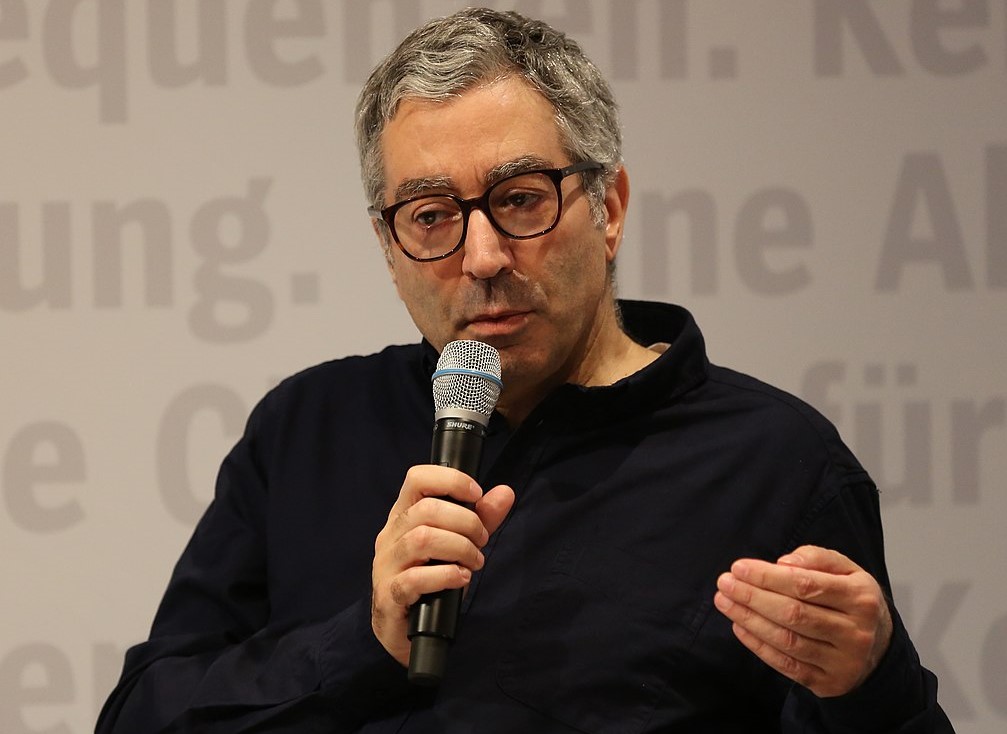
In The Life, Old Age, and Death of a Working-Class Woman you follow the life of your mother: from her youth, when she was a worker and a political subject—she went on strikes, voted for the left—to old age, when she began voting for nationalists, and finally to her physical decline, when you and your brothers accompanied her to a nursing home.
When my mother was younger, she voted for the Communist Party, but she was not a member. She was not a member of a union either, but she was always there when the union organized a strike, always in the front line of protests. I visited my mother in the nursing home twice, because soon after she died. There I met my brothers. One of them I dislike—he is a fascist. But because we were helping our mother move into the home, we did not argue. He spoke nonsense, and I did not respond.
When my mother ended up in a bed in the home, she lost her status as a political subject, since she could no longer walk. The home we placed her in was publicly funded, which meant underfunded. The problem was that she was very unhappy there. She left me messages on the phone saying she was treated badly. I called the doctor, and he told me: “In order to get her into the bathroom and shower her, I need two nurses, but I don’t have enough staff. This is only possible once a week.” This was unbearable for her, and after seven weeks she died. When she was cold, no one came. When she urinated, they left her waiting. She felt abandoned, overlooked, forgotten. She could no longer protest in the streets, organize actions, sign petitions. The only thing she could do was leave me long messages on the answering machine at night.
That was her protest.
Yes, it was a political protest. She protested against her conditions. But this protest had only one listener—me, through the phone. This raises the question: who will protest for them? Who will protest for all those in the same situation? I am convinced that everyone in nursing homes protests—they call their children, send them messages. But this multitude of protests remains private. They cannot really protest, they cannot organize. This was the starting point of my book: I must speak in the name of my mother, which means speaking in the name of all people who are in the same situation.
This is exactly the opposite of what identity politics claims—that we must not speak in the name of others. But that is precisely the responsibility of an intellectual, of an artist, of an activist—to speak in the name of those who cannot speak for themselves.
In Germany, a reviewer criticized me for speaking in the name of my mother. But that is exactly the point of my book. She could not speak for herself. If I had not spoken for her, no one would have. Now she is dead, and even then she had no possibility to speak. So it makes no sense to say: “Do not speak in the name of your mother.” That reproach is meaningless, even stupid—because it would mean that her story would never be known. The elderly do not live long. There is no political movement of the elderly who have lost physical autonomy—because they can no longer walk, move. Therefore organization is impossible.
Because my mother was treated so poorly in a public institution, I thought we should have chosen a private home—more expensive, but better. But at that very time, a French journalist published an investigation into private nursing homes. In the wealthiest suburb of Paris, one had to pay 12,000 euros per month for a home! There, people were practically starved, denied everything, because the goal was to generate profit. They called it “grey gold”—money squeezed out of the elderly, who cannot resist. When this investigation appeared, it caused a scandal in the media—three months of outrage. And then nothing. Nothing changed.
One of the references for your book was Simone de Beauvoir—her book La Vieillesse (Old Age).
That work is not as famous as her Second Sex, which is influential worldwide. The book on old age was forgotten. When my book came out, discussions began in newspapers, on radio, television—and people rediscovered Beauvoir’s Old Age. In it, she describes the position of the elderly and says: “I will make sure their voice is heard.” When I read that, I told myself: this is exactly what I want to do as well. I will make sure my mother’s voice is heard. I will make sure the voices of people in the same situation are heard. This is a wonderful project.
The role of the intellectual is not to say: “I will not speak in their name.” The role of intellectuals, artists, filmmakers is to show reality, to make it visible, to force society to see what it does not want to see, and to think about what it does not want to think about. I think this is one of the most beautiful roles of the intellectual—to speak in the name of those who cannot speak for themselves.
Nursing homes are a way for society to exclude the elderly, to push them aside. But we must once again include them in society—make them visible, make them heard.
And always be on the side of the unprotected.
The invisible, the marginalized, the unheard. Nursing homes are a way for society to exclude the elderly, to push them aside. But we must once again include them in society—make them visible, make them heard. Beauvoir already did this in 1970. After she turned gender into a political question, she did the same with old age. This is extremely important.
Ursula Le Guin would say that first it was necessary to “invent” the previously invisible woman, and then the invisible old woman.
In a way, yes. For me, my previous book, Returning to Reims, which has also been translated into Slovene, was a way of speaking about my working-class background. As a young gay man I wanted to escape my social environment, which was deeply homophobic, and go to Paris. I was interested in questions of gender, sexuality. I hid the fact that I came from the working class until I began to write about it. With the new book, I am adding old age to the political map. Above all, the age at which people lose their physical autonomy. Of course, there are pensioners’ movements—when people retire at 65, they can still demonstrate, write letters to newspapers. But once they lose physical autonomy, they can no longer protest. And society ignores them—ignores the position of people in nursing homes, where they live and die. This is a political issue that must be added to our mental map of politics.
Considering that younger generations are less and less inclined to have children, should we as a society invent new models of care in old age? Did any ideas occur to you while writing, about how to care for those who have no offspring?
When I visited my mother in the nursing home and then took the train back to Paris, I thought: when I am at that age, when I will have to go to a home—I don’t want to, but if I must—who will take care of me? I have no children. I have a partner, my friend Édouard, and a few others. But if you have no children and no friends, you are completely isolated.
Have you seen the beautiful movie by the Chinese director Wang Bing, Mrs. Fang? It’s about a village in China. In the movie, the family places the dying mother in the central space of the house, in the living room. She is dying over weeks, in front of everyone’s eyes. Meanwhile, they cook, eat, and she is dying. We can no longer imagine this. But if we hand over our parents to institutions, they are abandoned there. What to do? Some architects, urbanists, doctors have already proposed solutions—for example, to link nursing homes with student housing. Students would live there rent-free in exchange for spending two or three hours a day with the elderly—watching television with them, talking to them. This is better than working at McDonald’s, and for the elderly it is wonderful. There are countless ideas. Why do they remain in drawers? Why does no one implement them?
In France in 2023, pension reforms that announced raising the retirement age by two years triggered mass protests that paralyzed the entire country. Here, discussion of pension reform is mostly in the language of calculations and compromises, not as a human right. Does this tell us something about different historical traditions of class struggle? And can societies without a strong protest culture even preserve the welfare state?
That’s right, retirement is a human right. My mother worked in a factory for 15 years, her body was destroyed, she suffered pain in her shoulders, her knees—she could never have worked until 67. In the United States you see people at supermarket checkouts who are 70, 75 years old, because they still have to work in order to survive. That is why retirement is an extremely important human right.
They do not want to raise taxes for the richest—who are obscenely wealthy, with yachts, houses all over the world, money in tax havens in Panama and so on. Instead, they want to take away pensions, social rights, and money for survival.
It is true that people live longer, which is wonderful. But at the same time, states must find money for pensions. This is a matter of choice. In France, the neoliberal agenda has led to the dismantling of the public sector: hospitals, healthcare, schools, universities, public transport, housing. Everywhere there are cuts in funding. This is a political decision. They do not want to raise taxes for the richest—who are obscenely wealthy, with yachts, houses all over the world, money in tax havens in Panama and so on. Instead, they want to take away pensions, social rights, and money for survival. This is a political choice. I resist it.
I want a society where public infrastructure is alive: where people have decent pensions, unemployment support, public healthcare, education. These must be priorities—not dismantling everything for the benefit of the rich. They say the rich will invest in the economy and everyone will benefit. That never happens.
There is research showing that when you destroy public and social infrastructure, people start voting for the far right. But when the infrastructure is restored, people return to voting for the left.
Yes, research shows that one of the main reasons people vote for the far right is precisely the dismantling of public services. If you live in a small town where they have closed the elementary school, the post office, the hospital, the railway station—you feel overlooked, humiliated. A vote for the nationalists becomes a protest against being ignored. But if you restore public services and the accompanying infrastructure, people very quickly return to the left. Not all, but many. There is a direct connection: the state of public services determines how many people vote for the far right.
If society does not see you as important, you will defend your sense of dignity by voting for the far right. When class identity, or, let’s say, community—even in the sense of infrastructure—is gone, only national identity remains.
So the fight against the far right is not so much ideological as infrastructural?
It’s about dignity. If society does not see you as important, you will defend your sense of dignity by voting for the far right. When class identity, or, let’s say, community—even in the sense of infrastructure—is gone, only national identity remains.
It seems that today we see more clearly than before the problems of liberal democracies and their entanglement with capitalism, which produces wars. Even Israel, which is committing genocide against Palestinians, is supposedly a liberal democracy, as are the countries that support it.
Israel is not really a liberal democracy, since Palestinians do not have freedom of movement in their own country. What we see in the West Bank—the expulsion of people from their homes, the theft of land, the arrest of children as young as eight for throwing a stone and then being imprisoned for months—that is colonial violence. Of course, it is connected with capitalism, but it is also religious violence against the Palestinian population. International law is also ignored—UN resolutions, rulings of the international court. If Netanyahu’s plane flew over France, he would have to be arrested under the decision of The Hague. But if that is not enforced, he can do whatever he wants. What is happening in Gaza is the center of the world. Our heart is there, our thoughts, our art go there—and at the same time we know we can do nothing. And when we do something, there is no response. The worst is that European countries accept the genocide. They say they do not approve of it, but they do nothing to stop it. They continue to finance and arm Israel. The feeling is horrible—complete helplessness. People are dying, an entire civilization is being destroyed. This is the brutality of colonialism. Together with 300 French writers—among them Annie Ernaux, Édouard Louis, and many others—we signed a protest against this situation and called on the government to act. The protest makes the headlines, but nothing happens.
The worst is that European countries accept the genocide. They say they do not approve of it, but they do nothing to stop it. They continue to finance and arm Israel. The feeling is horrible—complete helplessness.
Has the world always been as full of catastrophes as it is today? Or has something radically changed for the worse? When confronted with social and environmental catastrophes, we cannot avoid the thought that the world as we have known it is coming to an end.
Of course I have no memory of it myself, but after the Second World War there was a sense that we could build something new. After all the horrors, there was a will for the future. Ken Loach made a beautiful movie, The Spirit of ’45. It speaks about the program of the British Labour Party after the war: to create public healthcare, public education, public transport, housing. They wanted to build a fairer society. On the left there was a sense that the future was possible. Of course, that program was later systematically destroyed—dismantled by conservatives who hate public services, saying they are “too expensive.” But we must try again—through political parties that advocate social justice. In France there is La France insoumise, in Britain the new left around Jeremy Corbyn, in Germany Die Linke. We need utopia, so that impossible things become possible again. We must rebuild the welfare state, restore the idea of equality.
Your friendship with the writer Édouard Louis and the philosopher Geoffroy de Lagasnerie is well known, you have turned it into a political project. How do you understand the role of friendship and intellectual community in writing and political action? Is such a community a prerequisite for developing new theories, literature, and politics?
Geoffroy, who is here with me today, wrote a book on this called Trois (Three), which deals precisely with friendship. I am older than Geoffroy and Édouard, as you know, and I had written books before I met them. But I have always been interested in what I call the politics of friendship. Friendship means that you can rely on other people—on people you trust, knowing you can ask them for something, and that if you need something, they will try to help. But at the same time, it is a way of life. Since we are gay and do not have families, we also have no children—some gay men do, but we do not—we are completely free, we can choose the life we want to live.
We talk about everything, especially ideas. We don’t all read the same books: Édouard reads more literature, Geoffroy political theory and philosophy, I read sociology and philosophy. We talk about what we are writing, about thoughts we had during the day or at night. The next day we say: “I wrote these two paragraphs, but I’m not quite sure.” Then we discuss them. When a book is almost finished, we ask each other to read it, and then we give comments, advice, even sharp criticism if necessary.
There is no hierarchy between you?
No hierarchy, no, no. It’s just that someone says: “Do you have time to read my manuscript?” And I say: “Yes, I will.” And then I read it. When I read Édouard’s or Geoffroy’s manuscript, I am not discovering their ideas for the first time, since we have already discussed them—I am discovering the written version of those ideas. And I criticize them. The criticism is sometimes quite harsh: “This doesn’t work, you can’t say this. On page 200 you wrote something that contradicts what you wrote on page 5.” There is no hierarchy, no strategy. We simply trust each other. The aim is to help one another improve what we want to achieve. And when the book is published, it doesn’t matter if others don’t like it—we don’t care. What matters is that the three of us are convinced that the book has achieved what it wanted.
Simone de Beauvoir, in her memoirs, describes the gatherings she and Sartre had with writers, philosophers, and others. Did de Beauvoir also give you the idea of the life you wanted to live?
Yes, those gatherings in cafés, restaurants, and so on. Her memoirs were extremely important to me when I read them as a teenager—I wanted to live that kind of life. Geoffroy in his book also mentions the circle around André Gide and the Impressionist painters—it was always about gatherings in cafés, restaurants. Through me there is also the circle of Michel Foucault, whom I met when I was much younger, through a friend who was a literary critic at Libération. Foucault, too, had the idea of friendship as a way of life—that is even the title of one of his interviews, Friendship as a Way of Life.
It is an entire tradition of literary, intellectual, and artistic circles, where people, when they are together, build something new. It is not only that through these gatherings each member of the circle improves their own thinking, writing, and creating. They also create something beautiful in itself—friendship itself. It is a way of life.
It is an entire tradition of literary, intellectual, and artistic circles, where people, when they are together, build something new. It is not only that through these gatherings each member of the circle improves their own thinking, writing, and creating. They also create something beautiful in itself—friendship itself. It is a way of life. I must emphasize that our friendship is not closed—it is open to other people. We have friends in common, but also each our own.
Does such a friendship also have direct political potential—in what ways can it threaten patriarchy, established social structures? And in what sense? Perhaps, sixty years after the hippies, we should again rethink the possibilities of love—its revolutionary potential?
It is complex, because Geoffroy is also my partner, not only my friend. He is my partner, but we do not live together—we live in separate apartments, not even in the same district.
That’s smart.
We see each other every day, but we do not live together, because we want to preserve the possibility of writing, our own space, room of one’s own, as Virginia Woolf would say. We are friends with Édouard, and we also have other friends. And yes, this is political, because—as Geoffroy shows in his book—when heterosexual people marry, sociological research shows that they stop going out. They stop socializing. They participate less and less in community life. They meet their friends much less often—once they saw them every day, later only once a year. This is not the same openness to the world, but a return to the old model of life: the couple and the children.
I don’t want to prescribe a lifestyle to anyone, I don’t tell people that their life is wrong and must be changed. We just live something else—the politics of friendship—we live outside social norms. Sometimes on social media people insult us because we are three, and they project their fantasies onto us—as if we were some kind of sexual trio, which is completely false. But we don’t care. It doesn’t matter what they say. Norms also need to be desexualized—you can be very close to someone who is not your partner.
Isn’t the act of writing together potentially erotic?
We don’t write together—we write separately, we only discuss ideas together. We couldn’t write in the same room. Recently I watched an old documentary about Simone de Beauvoir and Jean-Paul Sartre. Every day Beauvoir came to Sartre’s apartment, where each sat at their end of the room and wrote. If someone is next to me, I cannot write.
Perhaps in order to write freely we need the feeling that no one is watching. Just as we also need our own routines, which may differ from the routines of others.
When I write, I write for ten minutes, then … I go to the kitchen to get a glass of water, open the window, close the window, put on some music. It’s true, we each have our routines. We send each other photos, we meet as often as possible—as often as we can, which means very often. We go to the cinema, to the theater, to concerts, we travel together. Édouard is in Oslo now, so he’s not with us. We can’t be there because we are here now. But this is a way of life—we break the norms of what “normal” life is supposed to be. The established idea is that you have friends up to a certain point, and then come marriage and children. I never wanted to have children.
Could you even imagine writing and political activity without them?
Yes, I could. Before I knew them. I had published several books and was politically active even before I met Geoffroy and Édouard. I am a leftist intellectual, I was committed to the struggle for LGBT rights. It’s interesting: I was very devoted to the fight for marriage equality for gay and lesbian couples. I wrote several articles, I confronted opponents—psychoanalysts, priests, conservatives. I was devoted to the struggle for gays to get the right to marry. But I myself did not want to marry. Yet I think it is important that this right exists, because some people need it.
When we fought for the right to marry, they told us we were destroying the family. Now, when we say we don’t want to marry, again they say we are destroying the family. Whatever we do, we are destroying the family. Fine—then let’s destroy it!
Of course, let those who want to marry do so.
Of course. It is very important. But I told Geoffroy, when his book came out in which he writes that we must dismantle the family: when we fought for the right to marry, they told us we were destroying the family. Now, when we say we don’t want to marry, again they say we are destroying the family. Whatever we do, we are destroying the family. Fine—then let’s destroy it!
(We move to the garden, since the indoor spaces are about to close. He checks his messages and says that Édouard is writing to him from the festival in Oslo, where he has been for ten days, that he is tired and doesn’t know what to do, how to arrange things with the organizers.)
Tell him to come rest in Slovenia. (laughter) When Édouard was in Ljubljana in June, he told us he kept sending you videos because he was so impressed with the city.
Yes, that’s true, he really did send them to me. (laughter) Because friendship is a way of life, we also travel together, we have endless conversations even on holidays in Greece, in Italy, maybe next time also in Slovenia—since I’ve now discovered it, and it’s wonderful. I really want to come back.
–
The Slovenian version of this interview was originally published in the weekly magazine Mladina.


